Of Black and White Dice: A Designer’s Review
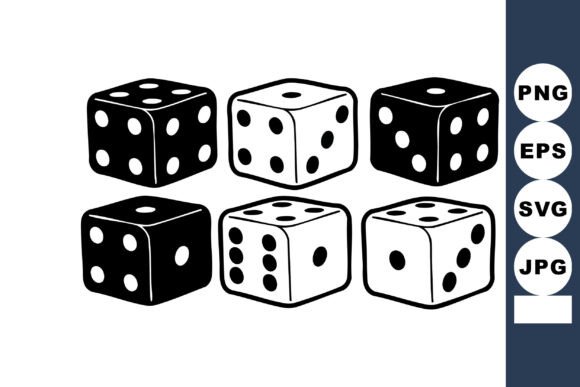
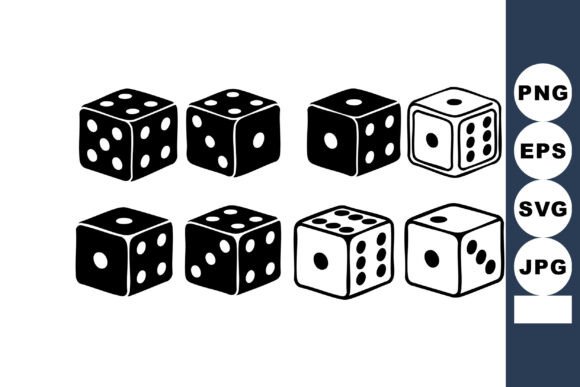
As an embroidery designer who has spent years digitizing patterns and reviewing design assets for commercial use, I approach every new graphic with a critical eye. It is not enough for an image to look good on a screen; it must translate flawlessly into thread and fabric. Recently, I evaluated Of Black and White Dice Showing Differe, a minimalist illustration featuring eight dice arranged in two rows. This piece falls under the category of Illustrations and serves as a versatile graphic for various creative applications. Here is my practical assessment of how this design performs in real-world embroidery projects.
First Impressions and Visual Mood
The immediate appeal of Of Black and White Dice Showing Differe lies in its calm, balanced composition. The clean vector style depicts gaming, luck, and chance themes without the visual clutter often found in casino-inspired graphics. The black and white color scheme creates a high-contrast, modern aesthetic that feels timeless rather than trendy. For an embroidery project, this simplicity is a significant advantage. Complex gradients and subtle shading are notoriously difficult to replicate with thread, but bold, flat shapes like these dice stitch out cleanly and consistently.
The layout, with dice showing different pips, suggests movement and randomness while maintaining structural order. This duality makes it suitable for a wide range of moods, from playful and youthful to sophisticated and understated. When I first viewed the file, I noted that the minimal detail level would likely result in a smooth stitching process, reducing the risk of thread breaks or excessive jump stitches that can plague more intricate designs.
Real-World Application: The Custom Tote Bag Scenario
To truly test the viability of this design, I imagined a common scenario for many Etsy sellers and craft business owners: creating a custom embroidered tote bag. Tote bags are popular handmade products because they are practical and serve as walking advertisements for the buyer’s style. Using Of Black and White Dice Showing Differe on a natural canvas or heavy cotton tote offers a striking visual contrast.
In this context, the black threads would pop against the light fabric, ensuring the design is legible from a distance. The arrangement of the eight dice allows for flexibility in placement. You could center the entire block for a bold statement on the front panel, or split the rows to wrap around a corner seam for a more unique, bespoke look. Because the design relies on basic geometric shapes, it maintains its integrity even when scaled up for a large tote bag design. Customers looking for personalized gifts or unique accessories would appreciate the clean lines and the symbolic nod to luck and chance, making it an excellent choice for graduation gifts, birthday presents, or promotional merchandise for game cafes.
Versatility Across Product Lines
Beyond tote bags, this graphic adapts well to other custom apparel and home decor items. For sweatshirt embroidery, the design works beautifully on the chest or sleeve. The monochromatic palette ensures it pairs well with any garment color, whether it is a classic heather grey, deep navy, or stark white. For baby embroidery, the soft, non-aggressive nature of the dice makes it appropriate for nursery decor, such as pillow covers or blanket accents, provided the scale is adjusted to suit smaller items.
For those running a small shop product line, this design can be easily integrated into a broader collection of gaming-themed or luck-themed items. It complements other Graphics in a catalog without overpowering them. Additionally, as a printable mockup element, it looks professional in digital listings, helping potential buyers visualize the final finished product before purchasing.
Technical Considerations for Embroiderers
While the visual appeal is strong, technical execution is where many designs fail. When working with Of Black and White Dice Showing Differe, there are several factors to consider to ensure a high-quality outcome.
- Fabric Texture and Stability: The clean lines of the dice require a stable surface. Textured fabrics like terry cloth or loose-weave linens may cause the edges of the dice to appear jagged. Always use an appropriate stabilizer—cut-away for stretchy fabrics like t-shirts and tear-away for woven materials like aprons or tea towels.
- Stitch Density and Type: Although the original file is a vector illustration, converting it into a machine embroidery design requires careful attention to stitch types. Solid fill stitches work best for the body of the dice, while satin stitches can define the edges if desired. However, avoid overly dense fill stitches, which can cause puckering, especially on thinner fabrics.
- Small Details and Pips: The pips (dots) on the dice are small. If you are using a small hoop size, ensure that these details do not become lost or merge together. Test the design on scrap fabric first to check if the pips stitch out clearly. If they appear blobby, consider simplifying the digitization or increasing the overall size of the design.
- Thread Color Contrast: Since the design is black and white, thread choice is critical. Use high-quality polyester or rayon threads for a slight sheen that enhances the modern look. On dark fabrics, you may need to adjust the design to include a white outline or background to maintain visibility, turning it into a pseudo-applique design effect through stitch planning.
Navigating Challenges and Limitations
No design is perfect for every application. There are specific situations where Of Black and White Dice Showing Differe should be used with caution. Curved surfaces, such as caps or hats, present a challenge. The rigid rectangular arrangement of the dice may distort when stitched onto the curved front panel of a baseball cap. In such cases, it is advisable to break the design into smaller segments or use a specialized cap frame to minimize distortion.
Additionally, be mindful of stitch density when embroidering on stretchy fabrics like jersey knits. High-density areas can pull the fabric, causing the garment to warp after washing. For commercial embroidery projects where durability is key, such as uniforms or frequently washed kitchen towels, reinforce the back of the design with a lightweight cut-away stabilizer to preserve the shape of the dice over time.
Enhancing Brand Value and Customer Trust
From a business perspective, the quality of your embroidery file directly impacts customer trust. A clean, well-stitched design like this one conveys professionalism. When customers receive a holiday embroidery gift or a custom patch that looks crisp and intentional, they are more likely to leave positive reviews and return for future purchases. The minimalist aesthetic of Of Black and White Dice Showing Differe aligns well with modern branding trends, appealing to buyers who value subtlety and elegance over loud, chaotic graphics.
For digital embroidery file sellers, offering this design as part of a bundle with other gaming or luck-themed elements can increase average order value. Ensure that you provide clear instructions on recommended hoop sizes and fabric types to help hobbyists and professionals alike achieve the best results. This level of support builds reputation and encourages repeat business.
Final Verdict and Practical Advice
In conclusion, Of Black and White Dice Showing Differe is a strong candidate for a variety of embroidery projects. Its strength lies in its simplicity, versatility, and modern aesthetic. Whether you are creating a personalized gift, expanding your Etsy seller inventory, or designing commercial embroidery assets, this graphic offers a reliable foundation.
Before committing to a large production run or selling finished items, always verify the licensing terms associated with the Illustrations and Graphics. Confirm whether the design is cleared for commercial use if you plan to sell the embroidered products. Check the specific file formats provided to ensure compatibility with your embroidery machine. By taking these preliminary steps and conducting thorough test stitches, you can leverage this design to create high-quality, visually appealing products that resonate with your audience.
Remember, the best embroidery projects are those where the design enhances the fabric rather than overwhelming it. With its calm mood and clear structure, this dice illustration achieves that balance, making it a valuable addition to any designer’s toolkit.