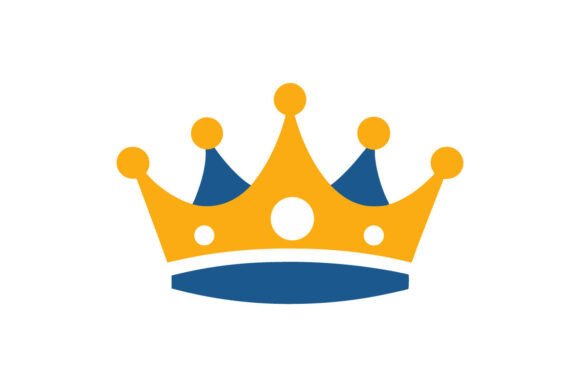
Crown Vector Icon: A Designer’s Embroidery Review
When I first pulled up the Crown Vector Icon on my screen, my immediate reaction was one of appreciation for its clean lines. As a designer who spends half my life digitizing and the other half stitching, I look for specific traits in a graphic before I even think about converting it or sending it to the machine. This particular illustration falls under the category of Illustrations and Graphics, but its true test lies in how it translates from a flat digital file to a textured, threaded reality. The design promises to symbolize royalty, elegance, power, and prestige, and visually, it delivers on that promise with a minimalist yet authoritative silhouette.
First Impressions and Visual Personality
The mood this design creates is sophisticated without being overly ornate. In the world of embroidery, less is often more, especially when dealing with symbols of status like a crown. Overly complex crowns can turn into a muddy mess of thread if not carefully managed. This Crown Vector Icon strikes a balance. The shape is recognizable instantly, which is crucial for branding or quick visual communication. The layout is centered and balanced, suggesting stability—a key trait for any logo or emblem intended for commercial use.
I appreciate the detail level here. It is not so sparse that it looks amateurish, nor so dense that it risks puckering the fabric. For an embroidery project, this visual personality suggests versatility. It feels at home on high-end boutique merchandise just as much as it does on a playful, personalized gift. The "king symbol" aspect is subtle; it relies on the universal recognition of the crown shape rather than excessive jewels or intricate filigree, which makes it a safer bet for various stitch types.
Real-World Application: The Custom Tote Bag Test
To truly evaluate a design, I always imagine it in a specific, real-life scenario. Recently, I was preparing a custom order for a local boutique owner who wanted a line of eco-friendly tote bags. She needed a tote bag design that screamed luxury but remained durable for daily use. I envisioned placing the Crown Vector Icon slightly off-center on a heavy canvas bag.
In this context, the design performs exceptionally well. Canvas has a distinct fabric texture that can swallow small details, but the bold outlines of this crown hold their own. I imagined using a classic gold or metallic thread colors palette to enhance the "royalty" theme. The result would be a striking contrast against natural beige or deep navy cotton. For an Etsy seller or small shop product creator, this kind of visual impact drives buyer engagement. Customers are drawn to items that look professional and intentional, and a clean crown motif signals quality.
Versatility Across Products
Beyond tote bags, this graphic is highly adaptable for custom apparel. Imagine it as a small chest emblem on a premium sweatshirt embroidery project. The simplicity allows it to sit neatly over the heart area without overwhelming the garment. It also works beautifully for baby embroidery on onesies or burp cloths, where softness and simplicity are preferred over heavy, scratchy stitching. For holiday embroidery gifts, such as Christmas stockings or New Year’s party favors, the crown adds a festive, celebratory touch that feels timeless rather than trendy.
If you are running a craft business, having versatile design assets like this is invaluable. It can be scaled down for an embroidered patch or scaled up for a statement piece on a pillow cover. The key is understanding how the design interacts with different surfaces. On smooth fabrics like satin or silk, the crisp lines will shine. On textured knits, you may need to adjust your approach to ensure clarity.
Technical Considerations for Stitching
While the visual appeal is strong, practical execution requires attention to technical details. Since this is a vector-based concept, the transition to a machine embroidery design depends heavily on how it is digitized. If you are downloading this as a digital embroidery file, you must check the stitch types assigned to each section.
Stitch Density and Fabric Choice
One of the biggest risks with crown designs is density. If the points of the crown are filled with too many stitches, they can pull and distort the fabric. I recommend checking if the design uses a mix of satin stitch for the borders and fill stitch for the interior, or if it relies on running stitch for a more delicate, sketch-like effect. For stretchy fabrics like jersey t-shirts, a lower stitch density is crucial to prevent puckering. Always use an appropriate stabilizer; a cut-away stabilizer is often best for garments that will be washed frequently, while tear-away might suffice for stable woven fabrics like aprons or kitchen towels.
Hoop Size and Placement
Before starting, confirm the recommended hoop size. While this icon is likely scalable, shrinking it too much for a tiny hoop can cause the details to merge. Conversely, blowing it up too large without adjusting stitch length can lead to long jumps or loose threads. For curved surfaces like caps or hats, consider the curvature. A flat design might distort on a rounded crown of a hat, so proper hooping technique and possibly a specialized cap frame are necessary.
Color Contrast and Visibility
Test the design in black and white mockups first. If the design loses its definition when stripped of color, it may rely too heavily on shading rather than line work. For dark fabrics, ensure you have enough contrast. A silver or white thread on black fleece creates a stunning, high-visibility look, whereas tonal stitching (like navy on navy) requires precise lighting and high-quality thread sheen to be appreciated.
Commercial Value and Brand Consistency
For those using this in commercial embroidery projects, consistency is key. The Crown Vector Icon helps build brand recognition because it is distinct and memorable. Whether you are creating printable mockup previews for your online store or producing physical finished product inventory, the design lends an air of professionalism. It suggests that the maker cares about aesthetics and symbolism.
However, always verify the licensing terms. Just because a file is labeled as a Graphics product does not automatically grant unlimited commercial rights. Check if the license allows for selling physical items, digital products, or both. Protecting your craft business means respecting intellectual property and ensuring you have the right to profit from your labor.
Final Verdict and Practical Tips
In summary, the Crown Vector Icon is a strong contender for any designer’s library. It is not just a pretty picture; it is a functional tool for creating value-added products. Here are my final practical notes for anyone planning to use this design:
- Test on Scrap Fabric: Never stitch directly on your final garment. Run a test on a similar material to check for puckering or thread breaks.
- Check Thread Tension: Metallic threads, often used for crowns, can be tricky. Adjust your tension settings to prevent shredding.
- Inspect Small Details: Zoom in on the digitized file. Are the points of the crown sharp? Are there unnecessary jump stitches?
- Consider the Audience: Does this design fit your target customer? For a luxury brand, yes. For a rugged outdoor brand, perhaps not.
- Verify File Formats: Ensure the embroidery file format matches your machine (PES, DST, JEF, etc.). If only vector formats (SVG, AI) are provided, you will need to digitize it yourself or hire a digitizer.
Ultimately, this design succeeds because it respects the medium of embroidery. It understands that thread has volume and texture, and it leverages those qualities to create a symbol of prestige that feels tangible and real. Whether you are making a personalized gift for a friend or stocking your Etsy seller shop with new inventory, this crown icon offers a reliable, elegant solution that stands up to scrutiny.